Forging the Future: How a Semiconductor Investment Boom Is Turning Arizona into America’s Semiconductor HQ

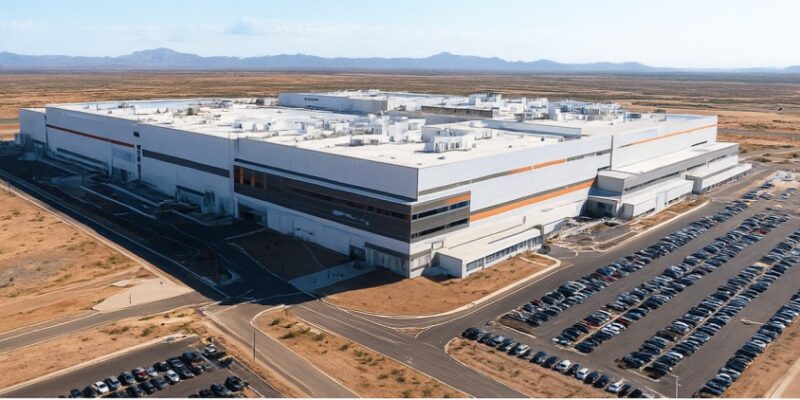
Arizona semiconductor investments are reshaping the state’s identity — transforming it into what many now call America’s Semiconductor HQ. Over the past five years, the Grand Canyon State has attracted more than $200 billion in private capital, thanks to a surge of major investment from global chipmakers and suppliers. This steady flow of funding is not only solidifying Arizona’s place in the global semiconductor supply chain — it’s positioning the state as a critical hub for American chip manufacturing and innovation.
A Historic Influx of Capital
Since 2020, more than 60 semiconductor-related projects have been announced in Arizona, totalling over $210 billion in capital investment, according to the Arizona Commerce Authority. Arizona Commerce Authority This wave of investment reflects a bold pivot: once a regional manufacturing center, Arizona is now a national linchpin for chip production.
One of the biggest players powering this boom is TSMC (Taiwan Semiconductor Manufacturing Company). The company initially committed $65 billion to build three “greenfield” fabs near Phoenix — among the most advanced in the U.S. CommerceThese facilities will deploy cutting-edge process technologies: the first fab using a 4 nm FinFET process, with planned second and third fabs targeting 3 nm and even 2 nm class nodes. Commerce
In March 2025, TSMC further expanded its vision for Arizona with an announcement that it would invest an additional $100 billion in new fabs, advanced packaging operations, and an R&D center. Arizona Commerce Authority This escalation boosts TSMC’s visible Arizona commitment to roughly $165 billion, anchoring the region’s status as a semiconductor stronghold.
Filling Gaps in the Chip Supply Chain
Beyond wafer fabrication, Arizona’s investment boom extends to advanced packaging and testing, critical stages in chip production. For instance, Amkor Technology, a leading semiconductor packager and tester, unveiled plans for a two-phase campus in Peoria, Arizona, with a total investment of $7 billion. Amkor Technology
This facility will feature over 750,000 square feet of cleanroom space and create up to 3,000 high-skilled jobs. Arizona Commerce Authority Backed by CHIPS Act incentives, the project is set to play a pivotal role in securing end-to-end U.S. chip production—from fabrication through packaging and testing. Commerce+1
Policy Support and Strategic Incentives
A key engine behind Arizona’s semiconductor surge has been federal support under the CHIPS and Science Act. The U.S. Department of Commerce awarded TSMC billions in subsidies tied to performance milestones. Commerce Combined with state-level incentives, these programs have encouraged companies to localize critical manufacturing capabilities and scale rapidly.
TSMC has also tapped into Arizona’s workforce development infrastructure. The company signed on with registered apprenticeship initiatives, collaborated with universities like Arizona State University (ASU) and community colleges, and committed to locally training new talent for construction and semiconductor roles. Commerce
The Talent Pipeline Strengthens
Arizona is not just building fabs — it’s building people. ASU, for example, has significantly ramped up its engineering programs to meet the growing demand. State-backed apprenticeship programs further support the sector, reinforcing a pipeline that fuels growth in both manufacturing and R&D.
This synergy of public backers, academic institutions, and private firms has made Arizona uniquely attractive to chip firms. Its mature ecosystem — spanning design, wafer fabrication, packaging, and testing — offers companies integrated supply chain benefits that are rare on U.S. soil.
Economic Impact Beyond the Fab
The ripple effects of such massive semiconductor investment go well beyond chip plants. According to economic development officials, each fab job often leads to five jobs in ancillary industries, including construction, food services, childcare, and logistics.
Local communities benefit too. As more chip-related firms enter the region, demand for housing, infrastructure, and services grows — forging a virtuous cycle of prosperity. For Arizona, semiconductors now represent more than just a booming tech sector; they are evolving into an enduring economic foundation.
Why It Matters: Strategic and Global Implications
Arizona’s rise as “America’s Semiconductor HQ” has clear strategic implications. By localizing advanced chip production, the U.S. reduces its supply-chain risks and strengthens its technological sovereignty. Commerce
Moreover, with TSMC’s fabs producing at process nodes like 2 nm and backing from key U.S. customers such as Apple, Nvidia, AMD, and Qualcomm, the region is becoming a central pillar in the future of computing, AI, 5G/6G, and autonomous vehicles. Commerce
Looking Ahead
As construction continues on fabs and packaging sites, the next few years will be critical. TSMC is targeting production ramp-up, while Amkor’s Peoria campus is expected to begin operations by 2028.
If projections hold, Arizona’s semiconductor ecosystem will only deepen—attracting more companies, talent, and capital. The state’s bold bet on chips could well define not just its economic future, but America’s technological future in the decades to come.


